Insurance Client Data Management System
Replaced a binder-based workflow for ~2,000 client records with a searchable, exportable web system
- Stack
- Python, Flask, SQLite, Google Sheets API (gspread), Google sign-in (Authlib), deployed on Render
- Timeline
- first built June 2025; rebuilt September 2026
- What it replaced
- a binder-based (physical/paper) workflow covering ~2,000 records
- How it works
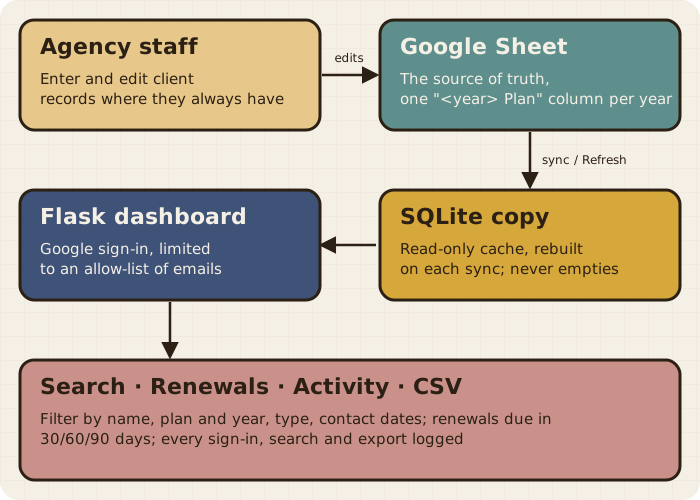
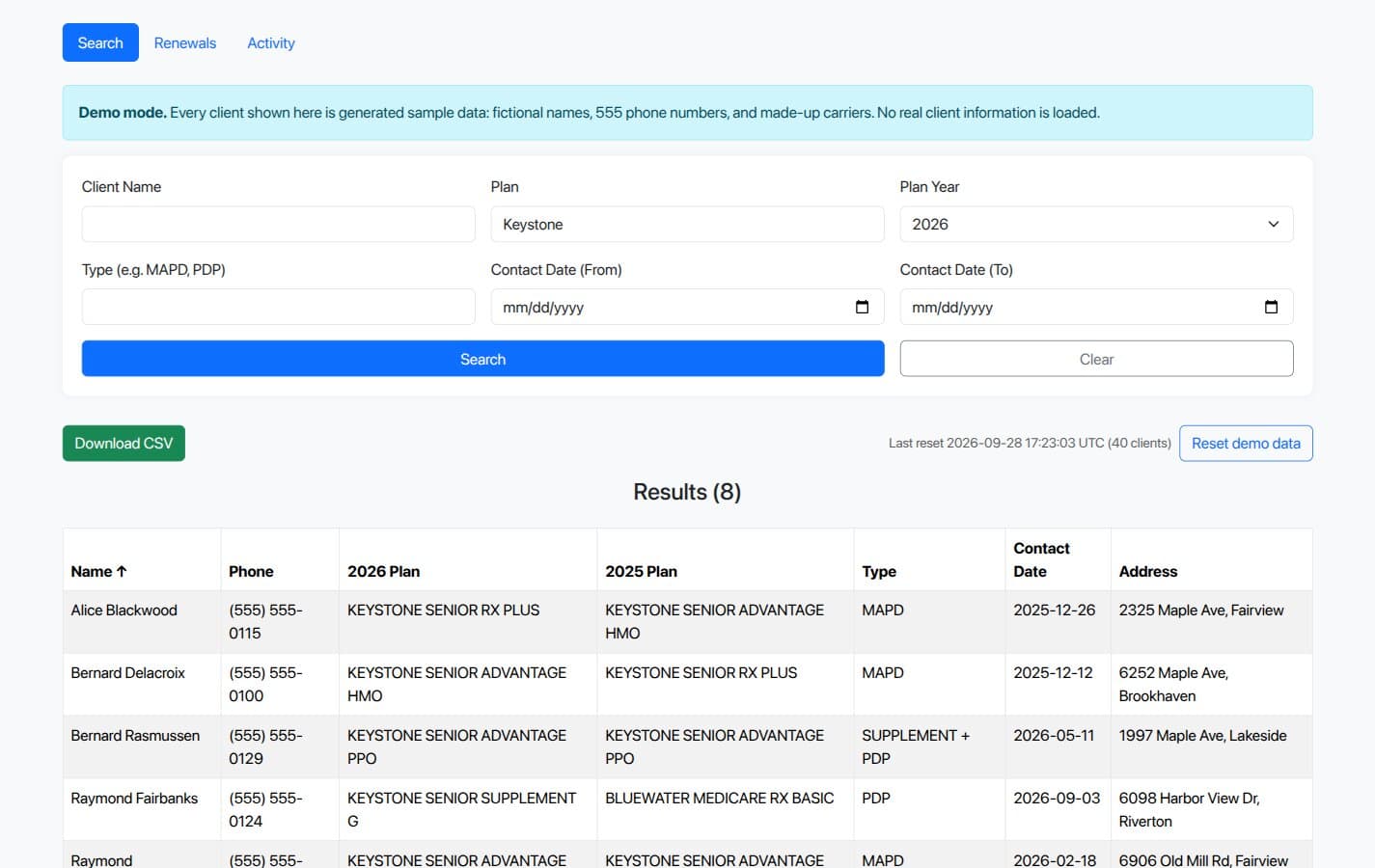
- the agency's Google Sheet stays the source of truth, where records are entered and edited; the app syncs it into a read-only SQLite copy for fast search, sorting, filtering and CSV export, and refuses to sync if the sheet comes back empty rather than wiping the copy
- Renewals
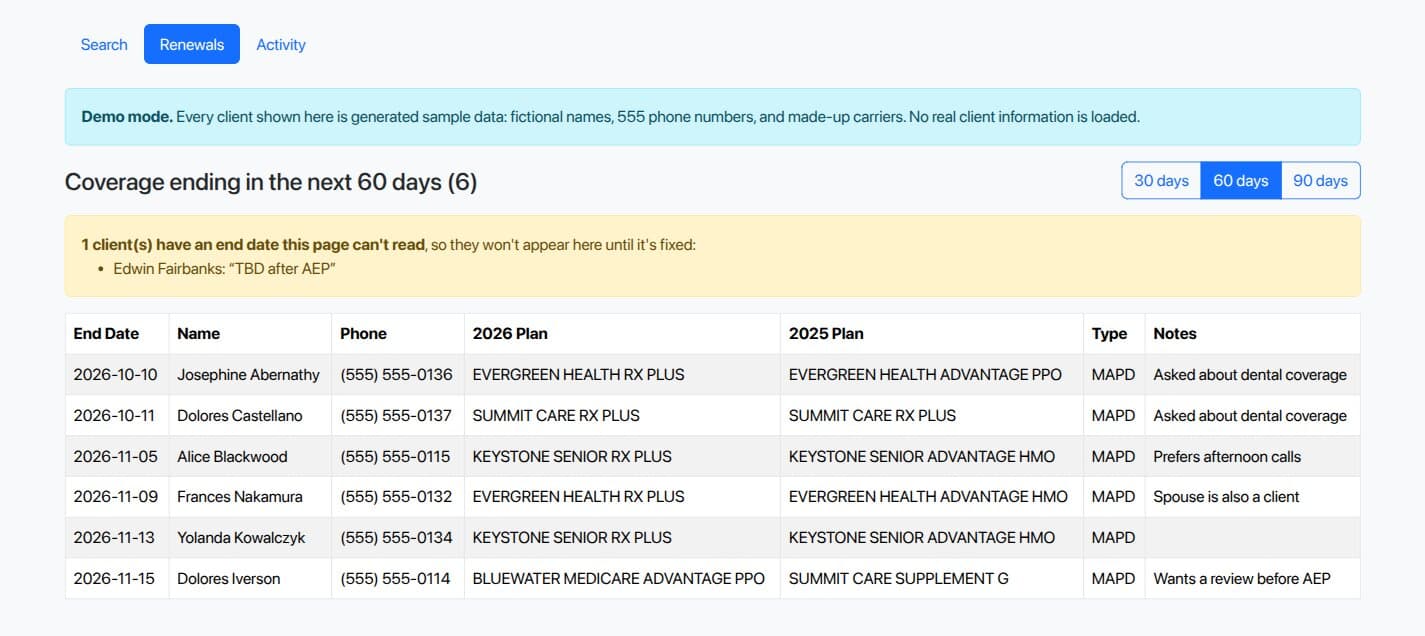
- clients whose coverage ends in the next 30, 60 or 90 days, soonest first, with any unreadable end date flagged separately so no client is silently missed
- Plans by year
- any
<year> Plancolumn in the sheet is picked up automatically, so a new enrollment season needs no code change - Access and audit
- Google sign-in limited to an allow-list of emails; every sign-in (refused ones included), search, export and refresh is logged
- Testing and data safety
- a pytest suite runs on every push in GitHub Actions, which also fails the build if a database, credentials or
.envfile is ever committed; a demo mode runs on generated sample clients and never opens the real data
Who it's for
First Senior Services, my dad's insurance company, which keeps records for roughly 2,000 clients. Before this, those records lived in physical binders. Now looking up a client's information and storing a new client's data both happen in one searchable place instead of paging through binders.
Simple by design
Out of the binders, the records now live in a Google Sheet, and staff add and edit clients right there. The app doesn't replace the sheet: it syncs it into a read-only SQLite copy for fast search, sorting and export, and never writes back. So the part people use every day didn't change, and if a sync ever goes wrong, the sheet is untouched.